

PWA as a format keeps getting written off. Every few months someone announces it’s too risky, too saturated, or too detectable. The same conversation has been running since 2022. Teams actively running PWA traffic in 2026 are still pulling solid numbers in competitive GEOs at profitable margins.
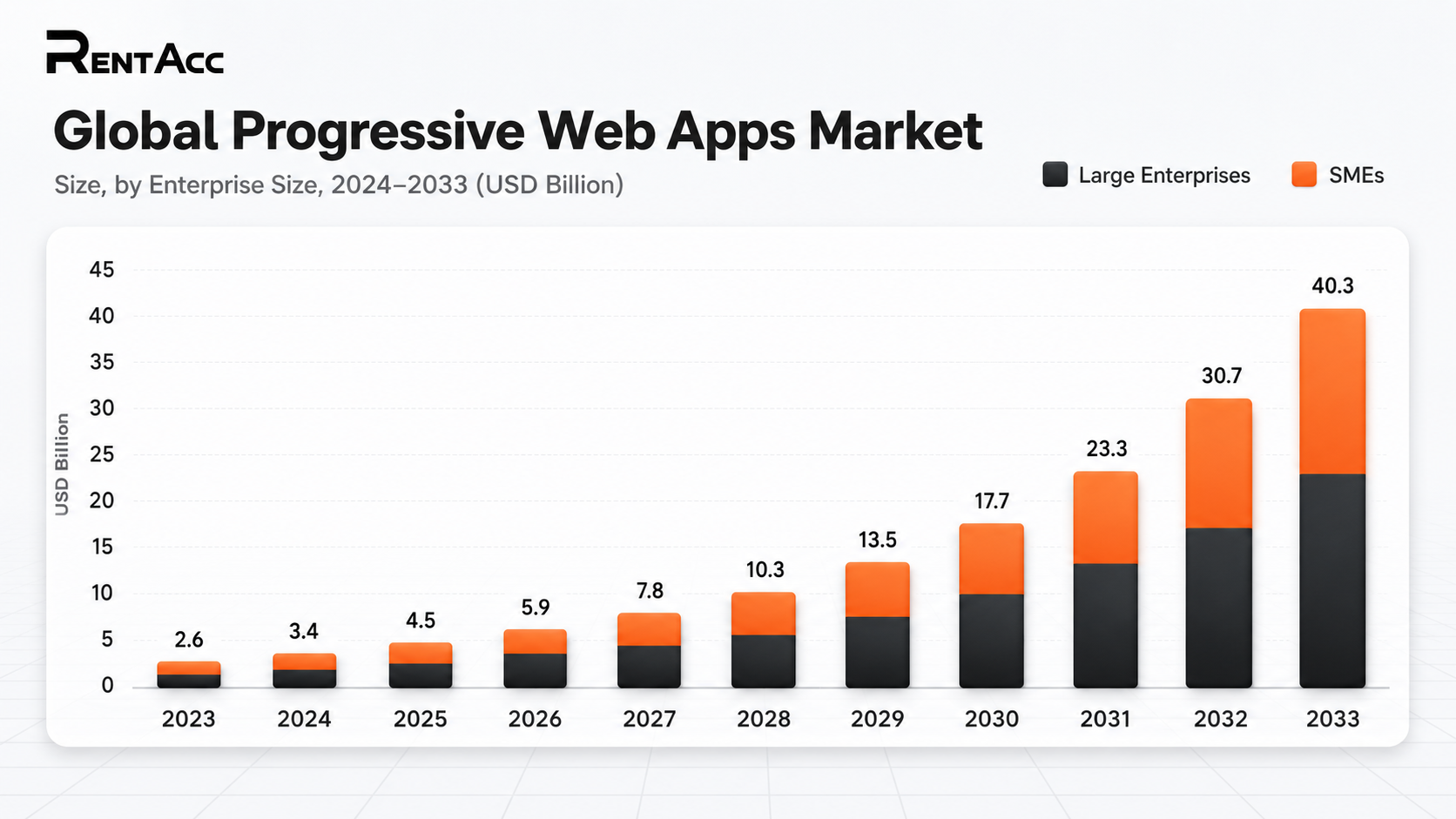 What’s changed over the past two years isn’t whether PWA works, but rather the standard for executing them successfully. If you could get by with a basic shell and a decent creative in 2024, today you’ll need a better approach. A clean cloaking setup, the right service, an appropriate affiliate program, and the right traffic infrastructure – these are only some of the elements required in 2026.
This article covers all of that: from the basics of how PWA works to the specifics of running traffic through Facebook agency accounts, with a real case showing what the numbers look like in practice.
What Is PWA and Why It Still Works
A progressive web app is a website that looks and behaves like a mobile app.
When a user visits the URL, they see a page designed to mimic the Google Play or App Store interface, complete with an app icon, ratings, reviews, screenshots, and an install button. The “installation” adds a shortcut to their home screen. There’s no actual APK or App Store listing.
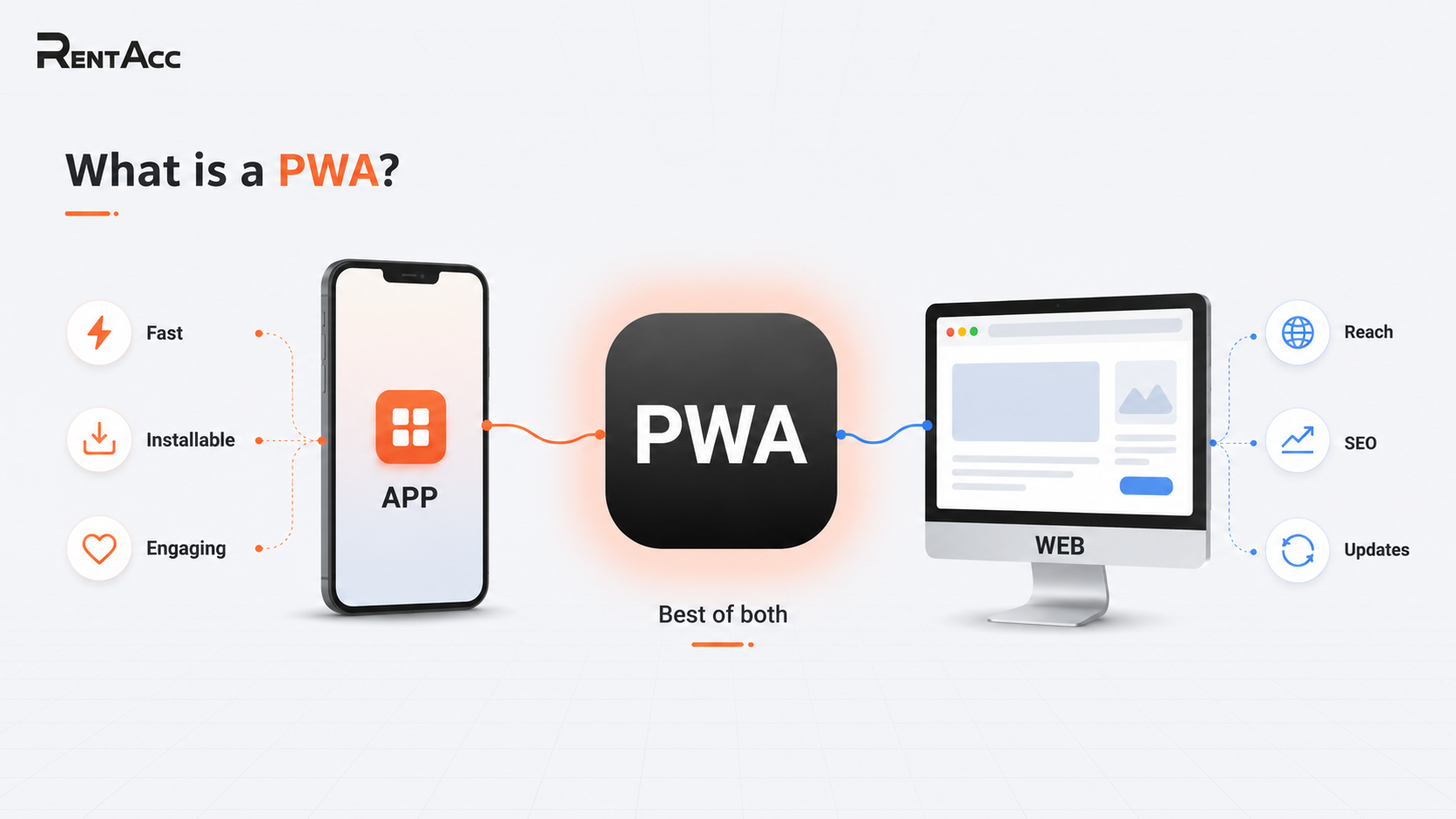
That’s the whole mechanism, and it’s precisely why the format survives moderation waves. There’s nothing to pull from a store, and the app doesn’t live in an ecosystem you don’t control. It’s the best way to test new media buying combinations and creatives without investing too many resources.
Difference Between PWA, Webview, and Native
PWA, WebView, and native apps all deliver a mobile app-like experience, but they differ in deployment approach, traffic source availability, and maintenance load.
A progressive web app runs entirely in the mobile browser. Users install it from a website, so there’s no need for Google Play or the App Store. That makes deployment fast and removes the risk of store moderation, but it also means you can’t use app-only traffic sources such as Google App Campaigns.
A WebView app packages web content inside a native app container. Publishing it to Google Play or the App Store provides you with access to app-install campaigns and other store-dependent traffic sources. The cost is higher maintenance: developer accounts, store reviews, and rebuilding or resubmitting when apps get removed.
A native app is built specifically for Android or iOS. Performance is the strongest of the three, and it supports every device feature and traffic source available. The trade-off is the longest build time and the most ongoing support.
| Feature | PWA | WebView | Native App |
| Installation | Directly from a website | Google Play or App Store | Google Play or App Store |
| Requires app store | No | Yes | Yes |
| Google App Campaigns | No | Yes | Yes |
| Facebook Ads | Yes | Yes | Yes |
| Push & native ad networks | Yes | Yes | Yes |
| Development complexity | Low | Medium | High |
| Time to launch | Fast | Moderate | Slow |
| Store review risk | None | Yes | Yes |
| Maintenance | Low | Medium | High |
| Best for | Fast deployment and web traffic | Store distribution with web content | Long-term products and maximum reach |
For most affiliate teams, PWA is the practical choice when store distribution isn’t a requirement.
App-install campaigns aren’t an option, but it runs on Facebook Ads, push traffic, native and teaser networks, SEO, email, and other web-based channels.
Teams working primarily with those sources tend to prefer PWA: the launch cycle is faster, there’s no store moderation to manage, and swapping creative assets takes hours rather than days.
Where to Get a PWA App for Media Buying
There are three realistic options, and the right one depends on how quickly you need to test and how much control you want over the setup.

Rental Services
This is the fastest path in. Services like TSL Apps provide ready-built PWA infrastructure built for affiliate traffic: ready-made templates and the ability to upload your own, AI tools for design and review generation, push notifications, and automatic translations into any language. Instead of putting everything together yourself, you can focus on the deployments right away.
Using a custom PWA design tailored to the specific geographic context yields higher metrics than standard template builds. Furthermore, a 7-day trial allows you to evaluate the platform for free.
Self-Build with AI and Low-Code Tools
This works for webmasters who want full control over the product.
AI can handle a significant part of the assembly, but it can’t diagnose your funnel for you. Without real campaign experience, you can end up with a technically functional PWA that doesn’t perform because the user flow wasn’t thought through.
Through an Affiliate Program
This is more common than most people realize, especially in gambling and betting.
Many programs in these verticals now offer PWA access directly: sometimes as a SaaS product, sometimes as a pre-built app tied to their specific offers. In the TSL affiliate program, for example, partners receive unlimited PWAs for free and can use them to upload to any offer worldwide.
The advantage is a PWA already calibrated to the product. The downside is less flexibility when you want to test different offers or change the setup significantly.
What a Webmaster Needs to Know Before Launching
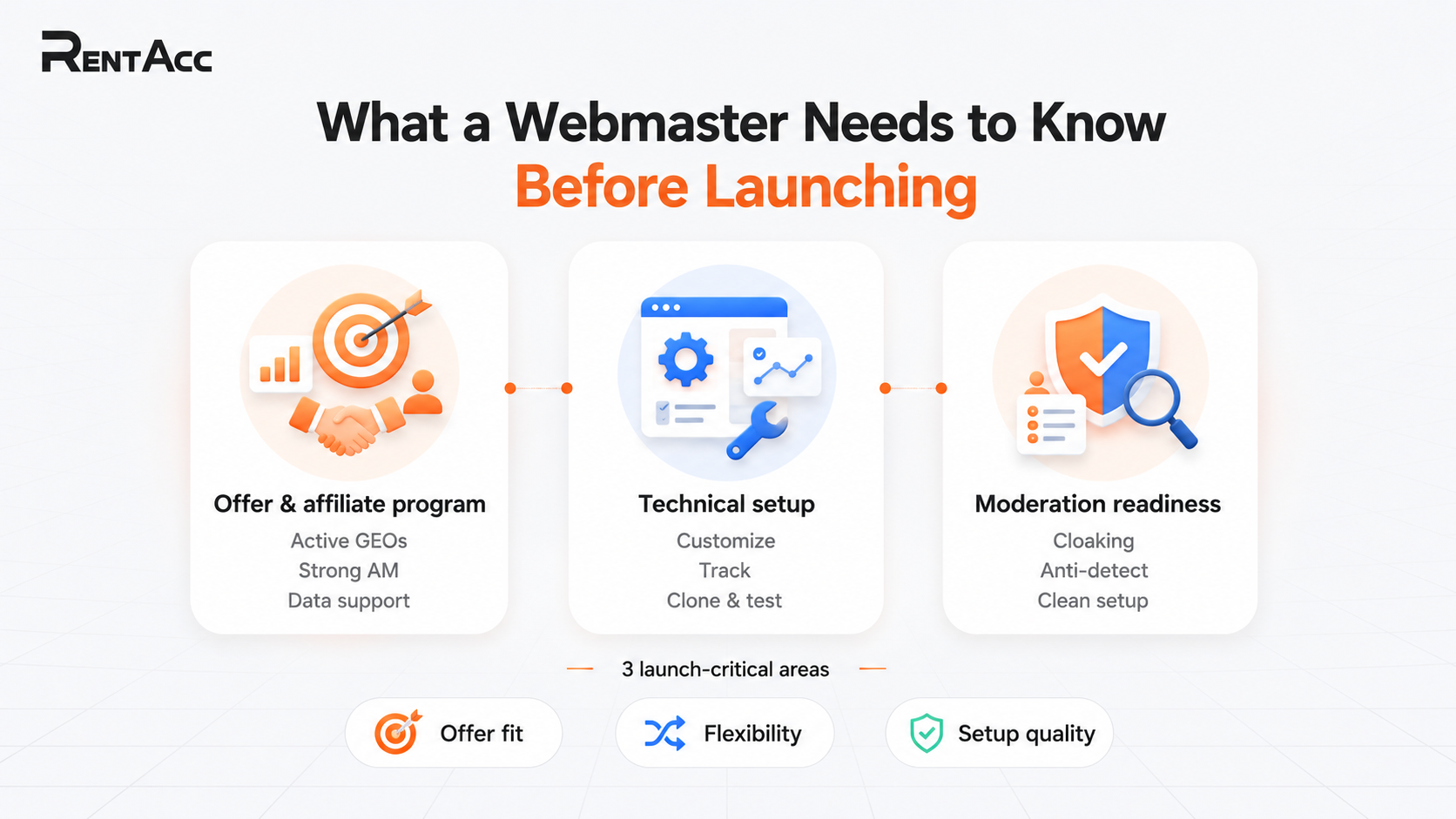
Before traffic goes live, decisions about offer selection, affiliate program quality, and technical readiness determine whether your launch has a real shot.
Choosing an Offer and Affiliate Program
You shouldn’t choose your offer based on payouts alone. A high CPA rate on a poorly supported offer costs more in wasted tests than the rate difference ever pays back. That’s why it is important to evaluate your affiliate program based on three things:
- Current offers with active GEOs
The program should have offers that are performing in your target GEOs. If an affiliate manager can’t tell you what’s working in a specific market today, it’s a sign they aren’t closely monitoring performance. Strong programs know which markets, products, and games are converting right now.
- An experienced affiliate manager
A good AM is more than a point of contact. They can recommend effective creative angles, provide realistic install-to-registration and registration-to-deposit benchmarks, and warn you when a geo is becoming saturated. That guidance reduces testing costs and helps you reach profitability faster.
- Data-backed support
The best affiliate programs help you optimize offers. Access to real performance data across multiple GEOs makes it easier to identify promising campaigns and avoid common mistakes.
TSL, as a PWA platform with long-term, 24/7 partner support. For teams just starting out with PWAs, the ability to receive the latest recommendations for deployment across multiple geographies significantly reduces the time spent finding a profitable solution.
Technical Requirements for Your PWA
All PWAs should be easy to customize. If you have hundreds of features but no flexibility, then you won’t be able to launch quickly. That leads to lost profits. So, the faster you can launch, test, and iterate, the quicker you can find profitable combinations.
Before choosing a PWA service, make sure it lets you:
- Change the app design, screenshots, and reviews without relying on support;
- Customize content for different offers and markets;
- Edit push notification copy, timing, and delivery settings;
- Connect your tracker to measure installs and post-install events;
- Clone existing PWAs to test multiple variations in parallel.
AI tools can speed up localization by generating app descriptions, screenshots, and other creative assets. They’re valuable for reducing production time, but they don’t replace understanding what users in a particular GEO expect from the product.
The less time you spend building and updating PWAs, the more time and budget you can dedicate to testing, optimization, and scaling winning campaigns.
Anti-Detect, Cloaking, and Moderation
While cloaking is a core technical component for running PWA on paid traffic, there’s no guarantee against moderation. The cloaking layer shows ad network crawlers and bots a compliant page. Real users see the actual PWA. How well that separation holds depends entirely on the quality of the bot detection logic.
Modern platform bots are more capable, and there are documented cases where bots passed through weak cloaking setups and saw the real offer page, which got the campaign flagged immediately.
Anti-detect browsers serve a different purpose. They help isolate ad accounts by preventing browser fingerprinting and account linking, but they don’t improve the effectiveness of your cloaking. They’re part of your account infrastructure, not just a substitute for a reliable cloaking solution.
What keeps campaigns running longer is overall setup quality. A well-built PWA with realistic reviews, a clean domain, and a properly configured cloaking layer runs longer with fewer disruptions than a rush job. Moderation outcomes are shaped by details that are easy to overlook when moving fast.
Traffic Sources for PWA: Facebook as the Main Channel
PWA traffic comes from multiple sources like:
- Push networks;
- Native ads;
- Teasers;
- SEO;
- Social media, and more.
Facebook stands out as the highest-volume option for most verticals, particularly gambling and betting. The trade-off is that it’s also the most demanding in terms of account setup and moderation management.
Unlike WebView or native apps, PWAs can’t run app-install campaigns because they aren’t listed in Google Play or the App Store. That means they can’t use Google App Campaigns or other traffic sources that require a store listing.
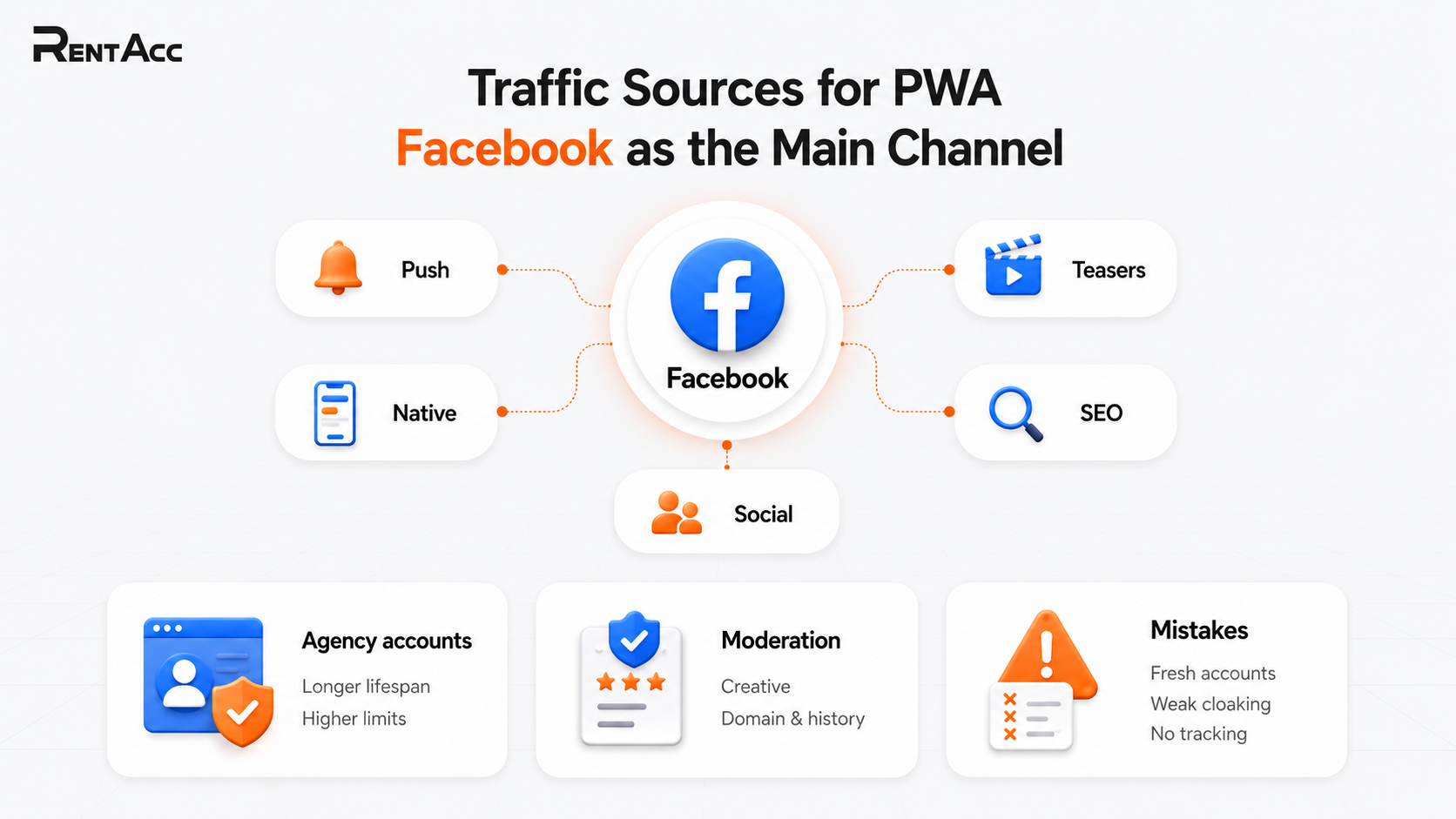
As a result, success with PWA often depends on mastering web-based traffic channels. Facebook continues to be the largest opportunity, while push, native, teaser, SEO, and email provide additional ways to diversify traffic and reduce dependence on a single source.
Why Agency Accounts Are Must-Have for PWA Launches on Facebook
Running gambling or betting campaigns from a personal Facebook account rarely works for long.
A restricted vertical, a new account, and aggressive ad spend are typically enough to trigger restrictions before you’ve collected key performance data. Agency accounts provide a much stronger starting point. Because they have established history and trust, they typically offer:
- Longer account lifespan before restrictions;
- Pre-configured Business Managers with the required permissions already in place;
- Higher initial spending limits, making it possible to test campaigns properly;
- Backup infrastructure so campaigns can continue if one account needs to be replaced.
Support is just as important as the accounts themselves. When an account is restricted, delays are expensive. Fast replacements and responsive support minimize downtime and keep campaigns running.
RentAcc provides agency accounts for teams working in iGaming and other niche verticals, providing the necessary infrastructure and speed of support critical to stable work with Facebook.
What to Expect from PWA Offer Moderation on Facebook
Facebook’s review process looks at the full chain: creative, domain, landing page, and what happens after the click. For PWA campaigns, the cloaking layer handles what the platform sees at the landing page level. Bots and crawlers see a compliant page. Real users see the PWA.
Several other factors also influence moderation:
- Creative quality
Ads with direct gambling imagery, casino branding, or slot machines are more likely to receive manual review. Lifestyle- or entertainment-focused creatives generally pass automated checks more easily.
- Domain reputation
Older, clean domains are reviewed with less friction than newly registered domains or domains associated with previous policy violations.
- Account history
When working with domains, it’s best to buy or connect your own domains instead of using service system domains to create a subdomain. The most trusted zones are .com/net. The most triggered ones are .tech/shop/cfd.
Common Mistakes When Launching PWA Through Facebook
The same errors show up across different teams and experience levels:
| Issue | Description |
| Personal or fresh accounts | Restricted verticals on untrusted accounts don’t last. The first campaign might go through, but scaling is nearly impossible before the account burns. |
| No account warmup | Jumping straight into gambling campaigns at full spend triggers restrictions fast. Running compliant traffic first builds the account’s trust score with Facebook. |
| Weak or broken cloaking | Without proper cloaking, the real offer page ends up in front of Facebook’s crawlers. That bans the campaign and can take the domain and Business Manager with it. |
| Shared domains across accounts | Once a domain gets linked to a banned account, it carries that signal. Using the same domain across multiple accounts multiplies the damage when one goes down. |
| Aggressive budget increases | Spiking spending too fast triggers Facebook’s systems and risks hyperspending, where charges outpace the daily cap before it kicks in. Gradual increases are significantly safer. |
| No event tracking | Without install, registration, and deposit events firing correctly, the algorithm has nothing to optimize toward. You pay for unqualified traffic with no path to improvement. |
PWA Launch Checklist for 2026
Before spending on traffic, all critical setup elements should be completed. Missing steps here typically lead to higher losses in wasted budget than the time saved during setup. Follow this checklist from RentAcc’s experienced account managers to reduce launch risks and avoid basic setup mistakes.
| Stage | Checklist Item |
| Before launch | Geo and offer confirmed with the affiliate program. |
| PWA built and adapted: reviews, design, and icons match the target geo. | |
| Event tracking tested: install, registration, and deposit events confirmed firing in the tracker. | |
| Cloaking tested across GEO, device, IP, referrer, and bot-filtering scenarios. | |
| Push notification flow in place: prompt timing configured, default notifications active, at least one custom sequence ready. | |
| Several creative variations prepared for split testing. | |
| Agency account set up with the correct Business Manager and pixel configuration. | |
| During testing | Track cost per install and cost per first deposit separately from day one. |
| Cut ad sets showing no install activity within 24 to 48 hours. | |
| Don’t adjust budgets during the active optimization window. | |
| Monitor account health daily while spend is active. | |
| At scale | Increase budgets in 20 to 30 percent increments, not overnight doubles. |
| Scale with creative variations that have already been tested. | |
| Clone working PWA structures instead of rebuilding from scratch. | |
| Keep push sequences and retention mechanics running alongside new user acquisition. |
Practical Case Study with PWA Launching in Argentina
Slots traffic in Argentina runs expensive, and early June 2026 made it harder: stricter Facebook moderation and tighter creative review. The campaign still closed in profit.
- Offer: Rabona (iGaming, Argentina), CPA: $18.
The campaign brought 8,044 clicks and 5,938 unique users, converting 2,938 of those to installs (roughly 50% of uniques). From there: 1,007 push subscriptions, 958 leads, and 130 first deposits.
- Spend: $1,620;
- Revenue: $2,340;
- ROI: 44%.
Around half of all unique visitors installed the PWA, which is a strong rate for Argentina without incentivized traffic. Part of the final leads and deposits came through push notifications, which brought users back after the initial install.
Install-to-registration sat at roughly 1:3, registration-to-first-deposit at 1:7. Neither number stands out, but both held across the run. At an $18 CPA, a consistent funnel matters more than a flashy one, and that consistency kept the campaign profitable.
Summary
PWA rewards teams that prepare properly.
The results above didn’t come from unusual conditions or a special offer: they came from a properly built app, the right account infrastructure, and a funnel with every layer in place.
If you’re looking to test PWA traffic or scale campaigns you’re already running, the two starting points are a PWA service that handles the product side and agency accounts that give you real running room on Facebook. RentAcc’s services will help you get your first setup and launch with ease today.
Go to RentAcc | Telegram Bot | Latest news

RentAcc is a platform for working with Facebook and in-app — ready-made agency accounts and automation. Suitable for solo buyers and teams who value stability, transparency, and a technological approach.
Commission: 4 to 10%
Inside the platform:
— agency accounts for any verticals and GEOs
— free replacements and money-back guarantee
— centralized control of spending
— technical support for launches
— instant notifications in the TG-bot




Sending the message, you agree to follow by the terms of our. Privacy policy.