


Everyone working with in-app advertising knows: the choice of traffic source is always tied to the vertical. Some platforms perform better for high-value users and longer conversion journeys, while others are built for mass reach. Today, together with the RentAcc agency accounts team, we’ll break down which verticals most often run through in-app sources, their potential, and the specifics of launching campaigns.
Gambling and Betting
In-app sources with deep event-based optimization have become one of the most noticeable traffic channels for the iGaming vertical. Unlike traditional CPI buying, these platforms can learn from user actions. After the app install, they track registrations, deposits, and user activity. All of this data is used to find similar audiences.
For gambling offers, this is especially important because in many GEOs traffic costs remain high, while the amount of quality users is limited. It is not enough to simply drive installs — you need to acquire users who are highly likely to make a deposit and continue actively using the product.
A good example from the social casino segment is Huuuge Casino by Huuuge Games. The team used the Unity advertising ecosystem to acquire users through playable ad formats and scale the user base, increasing ROAS by 9x.
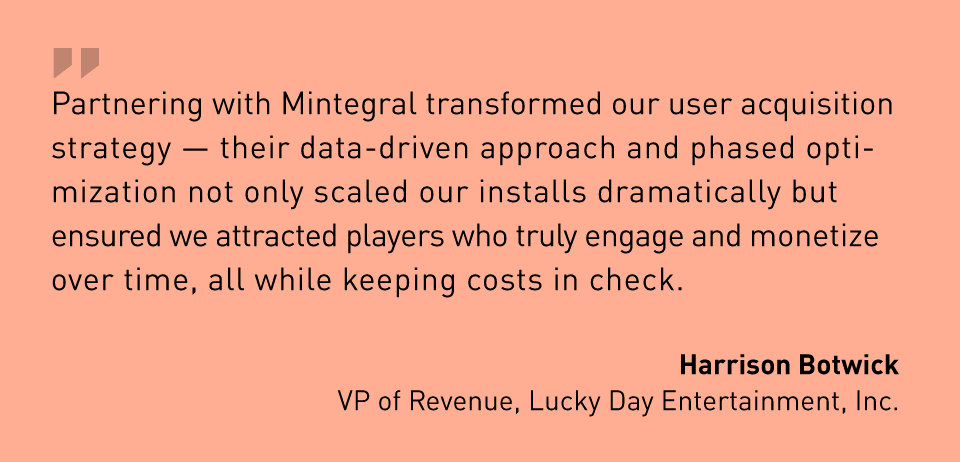
In a Mintegral case study, the Lucky Day team managed to increase install volume by 7x while maintaining high profitability thanks to UA campaign optimization.
In-app sources work as a more stable traffic channel, especially when the advertiser already has enough data accumulated for algorithm training. Without properly configured tracking, optimization efficiency decreases significantly. RentAcc experts have prepared multiple guides on how to make your start with in-app traffic as fast and simple as possible — check out our blog.
Finance Vertical
The key feature of the finance vertical is the long decision-making cycle. Users rarely complete the target action immediately after installing the app, especially when it comes to trading platforms, investment products, or neobanks. For finance apps, an install alone is not enough — users need to register, complete KYC, make their first deposit, and start actively using the product. Modern in-app algorithms take this into account and optimize traffic acquisition for deeper events rather than just installs.
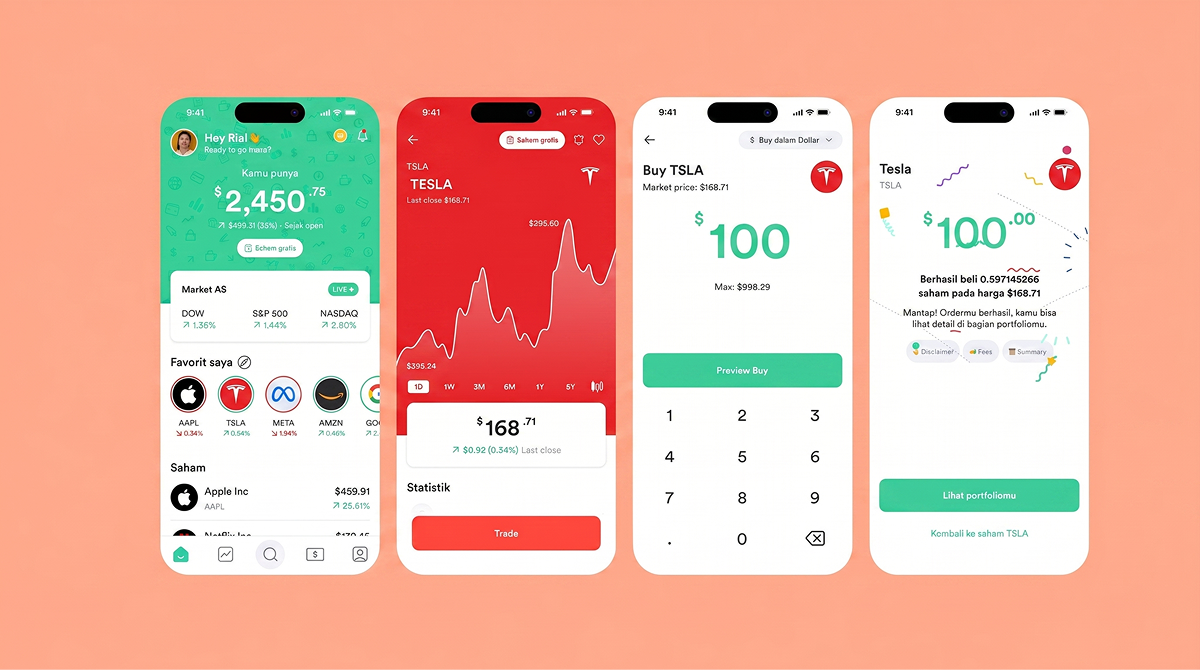
In finance, the key indicator of traffic quality is the user’s further action — registration and account funding. For example, the Indonesian investment platform Gotrade managed to double ROAS and increase the number of funded accounts by 35% with Adjust by optimizing post-install user journeys.
Many advertising channels often limit conversions even when budgets increase. Mature in-app platforms with full MMP integration usually do not have this issue — advertisers can receive complete user data, creating ideal conditions for automated optimization.
E-commerce
For e-commerce and shopping offers, in-app sources can also become a strong traffic channel. Advanced platforms optimize not only for app installs or adding products to carts, but also for deeper events — confirmed purchases, repeat orders, and overall campaign ROAS.
Thanks to the large amount of analyzed data, these sources allow scaling even in highly competitive categories: fashion and beauty, electronics, delivery services, marketplaces, and retail apps. Dynamic creatives deserve special attention here. In e-commerce, this is one of the key tools because product catalogs constantly change, and users react differently to categories, prices, and ad formats. If an approach does not perform, it makes sense to pause the creative.
Additionally, advanced in-app algorithms can re-engage users who have already interacted with the app: viewed products, added items to the cart, or made purchases before. For e-commerce products, this is especially important because a significant share of revenue often comes from repeat purchases.
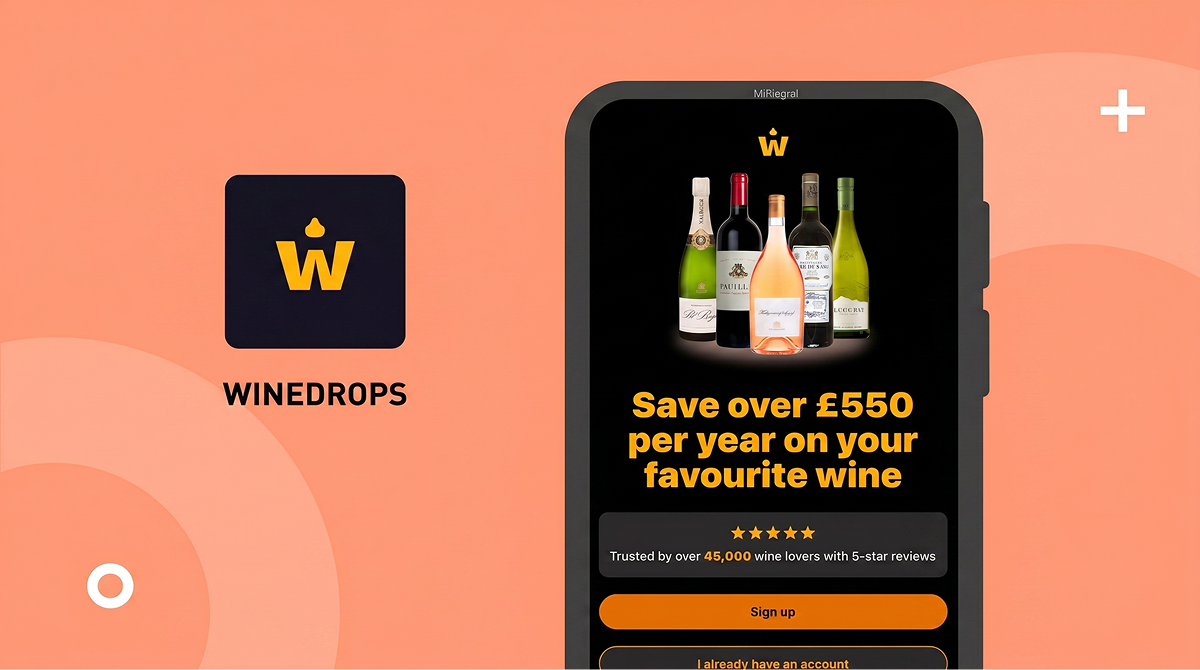
Winedrops, an app that helps users choose and buy wine, aimed to increase the number of paid subscribers. In cooperation with Mintegral, the team launched a new strategy — optimization for the pre-payment event “app trial activation” (trial → paying users). As a result, they increased the number of trial subscriptions by 10x in just three months.
Conclusion
In-app channels are gradually becoming a proven traffic source for many verticals — from gambling and betting to finance and e-commerce. The key advantages are event-based optimization, powerful machine learning algorithms, and large volumes of mobile traffic.
With properly built analytics and event tracking, in-app sources allow teams to scale campaigns without significant loss of audience quality, making this channel one of the most interesting solutions for mobile traffic acquisition.
By working with in-app through the RentAcc technology platform, teams can reduce routine workload and get access to popular in-app sources such as Unity, BIGO, Mintegral, Kwai, and Xiaomi Ads.
Go to RentAcc | Telegram Bot | Latest news

RentAcc is a platform for working with Facebook and in-app — ready-made agency accounts and automation. Suitable for solo buyers and teams who value stability, transparency, and a technological approach.
Commission: 4 to 10%
Inside the platform:
— agency accounts for any verticals and GEOs
— free replacements and money-back guarantee
— centralized control of spending
— technical support for launches
— instant notifications in the TG-bot






Sending the message, you agree to follow by the terms of our. Privacy policy.